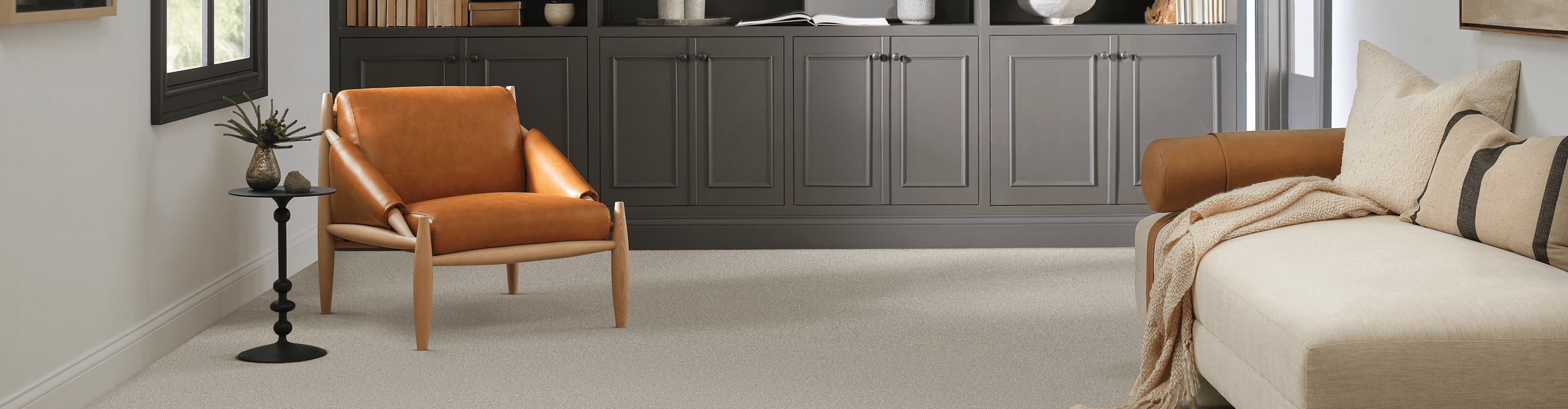
As your dedicated flooring partner, we're here to help you find flooring that's as good for the planet as it is for your home. Sustainable flooring has never looked better, and our eco-friendly hardwood and carpet selections make it easy to bring reclaimed resources and recycled content into your home. Read on to explore what to know about sustainable flooring and how we can help you find the right fit.
Not all eco-friendly flooring earns that label the same way. Some options, like bamboo and cork, are valued for how quickly they renew. Others, like reclaimed wood and recycled glass tile, get their green credentials from repurposing materials that already exist. And some, like linoleum, stand out for what they're made of: natural ingredients rather than synthetic ones. Understanding these differences helps you match the right material to your priorities, your space, and your budget. Our showrooms carry a wide range of eco-friendly hardwood and carpet, and your local store can walk you through what's available near you.
Bamboo and cork are two of the most rapidly renewable flooring materials available. Bamboo regrows to harvest ready size in just three to five years, far faster than traditional hardwood trees that take decades to mature, and it's notably hard, scoring higher on the Janka hardness scale than many traditional hardwoods. Cork comes from the bark of the cork oak tree, which is never cut down and regenerates within three years. It also brings practical perks that are easy to overlook: natural insulation against temperature and sound, resistance to mold and mites, and improved indoor air quality.
Bamboo and cork aren't part of our standard product lineup in most locations, so check with your local store on sourcing if either is on your shortlist.
Traditional hardwood lovers can still shop sustainably. Reclaimed wood repurposes timber from long since felled trees, bringing genuine character, sought after distressing, patina, and markings that newly milled wood simply can't replicate. It's authentic reclaimed style, not a recreation of it.
If you're shopping new wood floors, look for the Forest Stewardship Council (FSC) certification. FSC-certified styles confirm that the manufacturer adhered to responsible forest management standards, with higher social and environmental benchmarks than conventional timber sourcing. Look also for eco-friendly finishes and stains that keep VOC emissions low, which benefits both indoor air quality and the broader environment. For more information on sustainable wood options, see our hardwood flooring types guide.
Recycled glass tile is a standout eco-friendly option for floors, kitchen backsplashes, and bathroom walls. Made from reclaimed sources including wine bottles and beer bottles, glass tile comes in a wide assortment of colors, patterns, and finishes. Glass is non-absorptive and easy to maintain, and its light reflecting properties brighten a room in a way ceramic tile can't match. At the end of its life, glass flooring can be recycled, making it one of the few flooring materials with a genuine circular story. Explore more options in our tile types guide.
Recycled glass tile isn't part of our standard lineup, but our tile experts can point you toward eco-conscious options we do carry.
Sustainable carpet has come a long way. Wool carpet remains the most naturally eco-friendly soft surface option. It's made from a renewable resource, biodegradable at end of life, and naturally flame resistant without chemical treatment. It can be dyed to any color and offers proven durability.
PET carpet, made from recycled plastic bottles, is the most popular recycled option, diverting millions of pounds of plastic from landfills. It's an economical choice well suited to kids' rooms, playrooms, and finished basements.
For a curated selection of eco-conscious carpet, look for the Green Select designation in our carpet catalog. Green Select products are made from materials that cause less harm to the environment, created with natural resources as well as eco-friendly synthetic materials, and available in an array of colors, styles, and textures.
Learn more about promoting a healthy home environment with hypoallergenic carpet.
Linoleum was the original water resistant surface and it's making a comeback for good reason. While vinyl is a synthetic product, linoleum is made from entirely natural materials: linseed oil, cork dust, tree resins, wood flour, pigments, and ground limestone. It's suitable for easy, quick installation and has long been a favorite of sustainability minded designers and architects pursuing environmental certifications. Modern printing advances have expanded the color and pattern range significantly, and updated sealers improve stain resistance, making linoleum a practical and genuinely green choice for environmentally conscious homes. For more options, see our waterproof flooring guide.
Eco-friendly hardwood and carpet aren't just a trend, they're a smarter way to think about your home. The materials underneath your feet shape the air your family breathes every day. That's why sustainable flooring deserves a closer look, and why we're ready to help you find the option that fits your space and your life. We know these materials inside and out, from how they're sourced to how they perform in your home, so you can choose with confidence. Don't wait to reach out today and discover which eco-friendly hardwood or carpet is right for you.
Environmentally friendly flooring comes in several forms, each with its own story. Cork and bamboo are prized for how quickly they regrow, often within three to five years, without the tree being cut down. Reclaimed wood and recycled glass tile take a different path to sustainability, repurposing materials that already exist rather than consuming new resources. The most honest answer is that it depends on the full picture: production process, transportation, installation materials, and end of life recyclability all factor into a product's true environmental footprint.
Both have improved significantly at modern manufacturing standards, and neither is inherently toxic when produced responsibly. LVP (luxury vinyl plank) is made from PVC, which can contain plasticizers; laminate uses a wood composite core with a resin layer. If low VOC emissions are a priority, look for third party low VOC certification on whichever product you're considering. That matters more than the material category. Learn more in our laminate vs. vinyl flooring comparison.
Wool carpet is the most naturally sustainable option. It's made from a renewable resource, biodegradable, and naturally flame resistant without the chemical treatments required by synthetic alternatives. PET carpet, made from recycled plastic bottles, is the most popular recycled content option and keeps millions of pounds of plastic out of landfills each year. For a curated starting point, look for the Green Select designation when browsing carpet options.
Thank you for contacting Carpet One Floor & Home. Your local flooring expert will reach out to you regarding your inquiry.